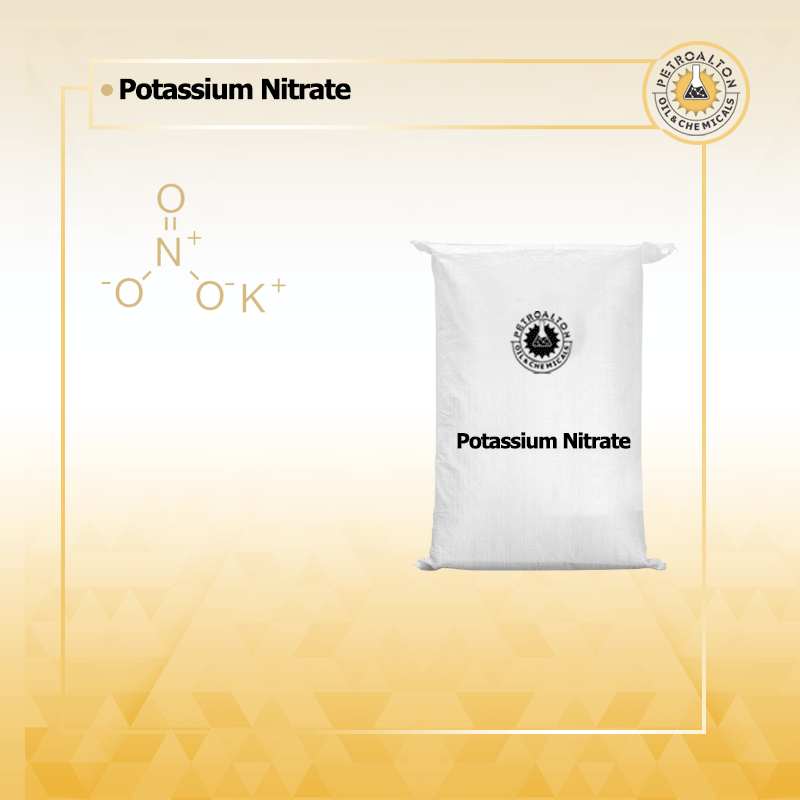
What is Potassium Nitrate?
Potassium nitrate (chemical formula: KNO₃) is a white crystalline solid composed of potassium, nitrogen, and oxygen.
When heated, it decomposes into potassium nitrite and oxygen gas.
It is highly soluble in water but non-disinfectant.
Potassium nitrate has a wide range of industrial uses, with fertilizer production being the most common.
Historically, it was a key component of gunpowder and was used in the manufacture of explosives such as dynamite and TNT.
Although these uses are mostly obsolete today, potassium nitrate is still used in artillery primers, grenade fuses, and fireworks.
Chemical Formula and Structure
- Formula: KNO₃
- Molecular Structure: (Illustration placeholder)
Factors Affecting the Price of Industrial Potassium Nitrate
The price depends on several factors including:
- Product volume
- Purity level
- Exchange rate
- Manufacturer and country of origin
Applications of Potassium Nitrate
- Fertilizers and Agricultural Chemicals
Potassium nitrate is widely used in the production of:
- Compound fertilizers
- Potting mixes
- Plant foods and lawn care products
It is also found in certain fungicides and pesticides.
- Nitric Acid Production
A major industrial use of potassium nitrate is in the manufacture of nitric acid.
When concentrated sulfuric acid is added to an aqueous potassium nitrate solution, nitric acid (HNO₃) is produced.
- Toothpaste Manufacturing
Potassium nitrate is an active ingredient in desensitizing toothpastes, helping protect teeth from pain caused by heat, cold, sweetness, or acidity.
- Food Industry
Due to its antibacterial properties, potassium nitrate is used as a preservative in meat products such as sausages and salami.
It prevents bacterial growth and helps maintain the color and flavor of food.
Production Method
Potassium nitrate is composed of three primary elements:
- Potassium (K): a soft, silvery metal
- Nitrogen (N₂): a colorless, odorless gas
- Oxygen (O₂): a reactive, life-supporting gas
When combined in proper proportions, these form the white crystalline compound KNO₃.
Raw materials can be sourced from sodium nitrate, nitric acid, or ammonium nitrate, depending on production methods.
Naturally, potassium nitrate can also form as thin, glassy white crusts on rocks, commonly found in caves and nitrogen-rich soils.
Major Producers
Leading global producers include:
- China
- Merck (Germany)
- BASF (Germany)
Difference Between Potassium Nitrate and Potassium Sulfate
| Property | Potassium Nitrate (KNO₃) | Potassium Sulfate (K₂SO₄) |
| Composition | Potassium + Nitrogen | Potassium + Sulfur |
| Soil Effect | Neutral | Acidifying |
| Use | General fertilizer | Fruit color enhancement and sweetness |
| Solubility | High | Moderate |
Production of Potassium Nitrate Fertilizer
Fertilizer-grade KNO₃ is produced by reacting potassium chloride (KCl) with a nitrate source (such as sodium nitrate, nitric acid, or ammonium nitrate).
It is typically sold as a water-soluble crystalline product, suitable for fertigation (irrigation application) or as solid pellets for direct soil use.
Benefits of Potassium Nitrate Fertilizer
Potassium nitrate provides two essential nutrients: nitrogen and potassium.
- Nitrogen (N): Essential for amino acid and protein synthesis; deficiency causes poor growth and yellowing leaves.
- Potassium (K): Enhances root growth, photosynthesis, and plant resilience.
Additional Advantages:
- Promotes root development
- Increases drought and disease resistance
- Reduces water loss and wilting
- Improves winter hardiness and plant strength
Application Methods
Potassium nitrate can be applied:
- To soil before or during the growing season
- Through irrigation (fertigation)
- As a foliar spray to quickly correct nutrient deficiencies
Suitable for:
Fruit trees, citrus, pineapple, cotton, banana, mango, grape, strawberries, vegetables, ornamental flowers, hydroponic systems, tobacco, potato, olive, lawns, and home gardens.
Dosage and Timing
| Application Type | Recommended Amount |
| Soil Application: | 50–150 kg/ha at planting time |
| Fertigation (Irrigation): | 25–50 kg/ha, 2–3 times per season |
| Foliar Spray: | 2–5 kg per 1000 L water |
Storage Guidelines
Potassium nitrate is not flammable, but it accelerates combustion of other materials.
It is a strong oxidizer and decomposes when heated into potassium nitrite and oxygen.
Storage Recommendations:
- Keep in a cool, dry, well-ventilated area
- Store away from heat sources and flammable materials
- Use sealed containers
Where to Buy Industrial Potassium Nitrate
For purchasing industrial-grade KNO₃, contact Petro Alton Tajhiz Co.
📞 +98 21 59236