Purchase and Sale of Butyl Glycol
Petro Alton Tajhiz Company, as one of the leading suppliers of the paint, resin, and chemical solvent industries in Iran, provides high-quality Butyl Glycol (BG) in the shortest possible time.
For purchasing, pricing, and datasheet requests, please contact our experts at 021-59236.
What is Butyl Glycol?
Butyl Glycol is a clear, oily, colorless liquid with a mild ether-like odor and low volatility.
It is produced by the reaction of ethylene oxide and n-butanol in the presence of a catalyst.
This compound is hygroscopic and miscible with water, ketones, alcohols, ethers, paraffins, and aromatic hydrocarbons at room temperature.
It is a neutral compound with a high boiling point, low volatility, and a mild odor, commonly used as a solvent and as a starting material for various syntheses.
Butyl Glycol has been commercially produced for over half a century, and due to its versatility, it is considered one of the high-volume industrial chemicals, with global production estimated between 300–500 kilotons per year.
It acts as an excellent coalescing solvent in water-based coating systems (aqueous paints), being completely miscible with both water and most common organic solvents at room temperature.
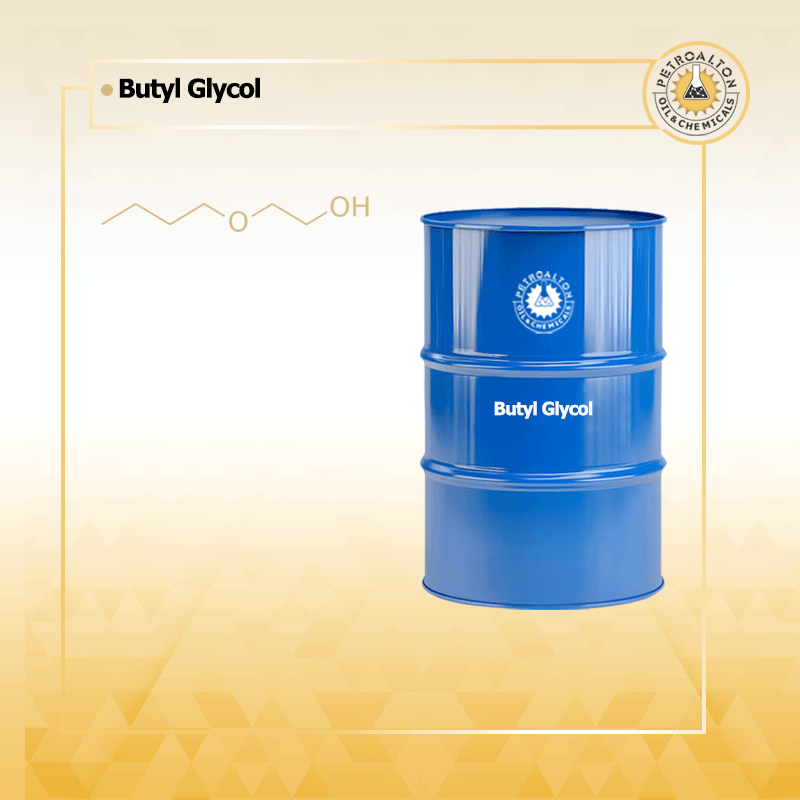
Chemical Structure and Formula
- Molecular Formula: C₆H₁₄O₂
- Composed of 6 carbon atoms, 14 hydrogen atoms, and 2 oxygen atoms.
Major Producers
- France: METRON
- United States: DOW
These are the most recognized manufacturers of Butyl Glycol worldwide.
Applications of Butyl Glycol
- In the Paint and Coating Industry
The primary application of Butyl Glycol is as a solvent in paints and coatings.
Its low volatility and ability to improve flow and leveling make it particularly useful in brush-applied paints.
It enhances paint smoothness, reduces film thickness, and controls drying time, improving the overall finish.
It is used in:
- Spray paints
- Quick-drying lacquers
- Water-based paints
- Latex coatings
- In Household Cleaning Products
Butyl Glycol is commonly found in glass cleaners, liquid soaps, and multi-purpose cleaning sprays due to its excellent degreasing power and ability to dissolve oils and grease.
It also imparts a characteristic odor to many household cleaning formulations.
Additionally, it is used in industrial and commercial cleaners and in adhesives for food packaging materials.
- In the Cosmetic and Personal Care Industry
Butyl Glycol is widely used as an ingredient in skincare and cosmetic formulations, including:
- Cleansers
- Serums
- Moisturizers
- Sunscreens
- Peel-off masks
- Mascaras
It enhances skin hydration, improves product absorption, and helps maintain a youthful appearance by retaining skin moisture.
The Cosmetic Ingredient Review (CIR) panel has confirmed that concentrations up to 10% are safe for use in hair and nail care products.
- In the Oil, Gas, and Petrochemical Industries
Due to its ability to reduce surface tension, Butyl Glycol is used to stabilize fluids under high pressure.
As a surfactant, it is absorbed by both oil and water phases, helping to:
- Prevent gas accumulation
- Facilitate gas dispersion
- Stabilize drilling fluids
- Aid oil extraction processes
- Prevent gas hydrate formation
- In the Leather and Wood Industries
Used in leather treatment processes and wood finishing for improved texture and solvent performance.
- Other Industrial Applications
- Degreasing metals
- Solvent in printing inks (especially for leather colors)
- Textile dyeing
- Component in hydraulic fluids
- Intermediate in plastic production (reaction with phthalic anhydride)
Safety and Hazards
Butyl Glycol is a flammable substance that can ignite easily.
It may cause irritation to skin, eyes, and respiratory tract and is harmful if ingested.
Precautions:
- Read all safety instructions on the product label before use.
- Contact with skin at concentrations up to 10% is generally safe, but long-term exposure to high concentrations may lead to adrenal tumors in animals and humans.
- Symptoms of ingestion include headache, nausea, and dizziness.
First Aid Measures:
- In case of skin contact: wash thoroughly with soap and water.
- In case of eye contact: rinse immediately with plenty of water.
- Contaminated clothing should be removed and washed before reuse.
- Avoid inhalation or ingestion.
Presence of Butyl Glycol in food products is extremely dangerous and must be strictly prevented.
Storage and Transportation
- Store in a cool, dark, and dry place, away from food and oxidizing agents.
- Use light-resistant containers made of carbon steel, stainless steel, or PTFE (Teflon).
- Transport either in bulk or in sealed drums.
- Protect from moisture, as exposure to air can lead to peroxide formation.
- Containers should be opened quickly and carefully, and the product should be stored under nitrogen gas.
- Maximum storage temperature: 40 °C
- Shelf life: Up to 12 months under recommended conditions.
Substitute for Butyl Glycol
Propylene Glycol is a safe alternative, widely used in skincare and as a food additive, offering similar solvent and moisturizing properties.
Factors Affecting Butyl Glycol Pricing
The market price depends on:
- Product volume
- Purity percentage
- Exchange rate
- Manufacturer or supplier
For the most up-to-date price, contact Petro Alton Tajhiz specialists at 021-59236.
Production Methods
Method 1: Ethoxylation Reaction
The most common method for industrial production:
Reaction between butanol and ethylene oxide in the presence of a catalyst.
Method 2: Etherification Process
Reaction between butanol and 2-chloroethanol.