What is Isothiazolinone?
Isothiazolinone (or Isothiazolinone compound) is a biocidal chemical that appears as a clear, colorless to light yellow liquid. It is a mixture of Methyl Isothiazolinone (MI) and Chloro Methyl Isothiazolinone (MCI) in a 3:1 ratio.
This compound disrupts the bonds within bacteria and algae, preventing them from feeding and leading to their destruction. Therefore, it acts as an antimicrobial, effective against both Gram-positive and Gram-negative bacteria, as well as yeasts and fungi.
It is widely used in detergents such as shampoos to prevent bacterial contamination—particularly in humid environments like bathrooms.
Isothiazolinone is completely water-soluble and is mainly used in cosmetic and personal care industries. Tests show that it has no side effects and no impact on the human nervous system.
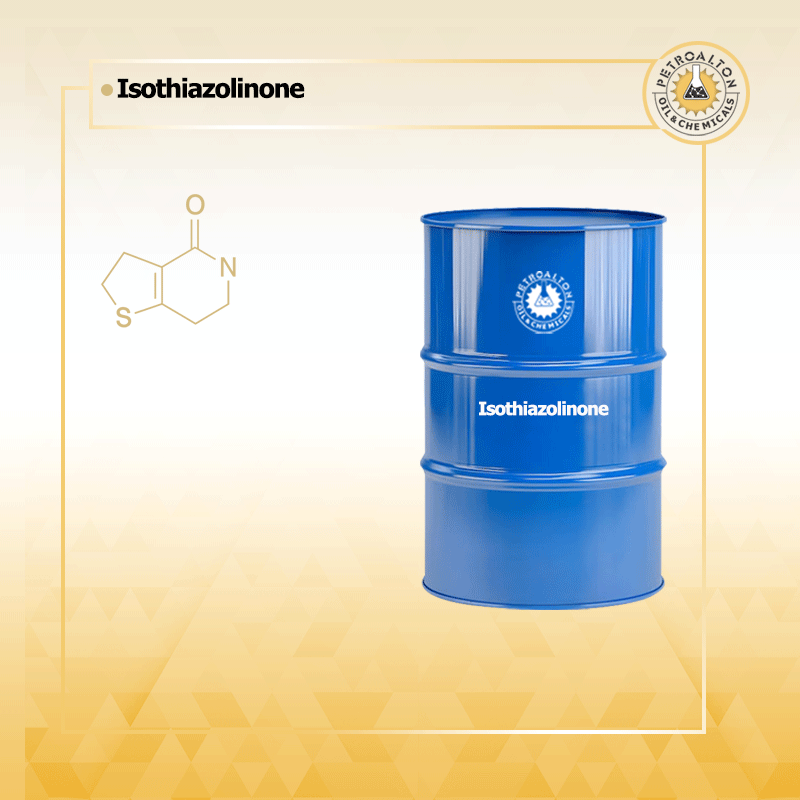
Molecular Structure of Isothiazolinone
(Structure illustration section)
Isothiazolinone Derivatives
This compound itself has limited application, but its derivatives are widely used as biocides. Major derivatives include:
- Methylchloroisothiazolinone (MCI / MCIT)
- Methylisothiazolinone (MI / MIT)
- Benzisothiazolinone (BIT)
- Octylisothiazolinone (OIT)
- Butylbenzisothiazolinone (BBIT)
Types of Isothiazolinone
- Isothiazolinone 14%:
Contains a higher concentration of active ingredient, making it more expensive. - Isothiazolinone 1.5%:
Diluted form of the 14% solution. This version is the most widely used.
Applications of Isothiazolinone in Industries
Used for improving preservation, controlling bacterial and fungal growth, and disinfection in various sectors such as metalworking and chemical storage.
- Use in Detergents
Applied in the production of detergents and cleaning products (dishwashing liquids, hand soaps, shampoos, and household cleaners).
- Use in Water and Wastewater Treatment
As a strong antimicrobial agent, it disrupts bacterial and algal growth in cooling towers, water storage systems, and wastewater treatment facilities (via MIT and CMIT derivatives).
- Use as a Preservative
Added to cosmetic and personal care products (like sunscreens, lotions, and moisturizers) to prevent spoilage.
- Use in Oil, Gas, and Petrochemical Industries
Used for microbial control in oil fields, pipelines, and drilling fluids.
- Use in Pharmaceuticals
Applied as a protease inhibitor in medications for treating anxiety and depression.
Other Applications
- Increasing the shelf life of wood products
- Paper and leather industries
- Replacement for formalin in detergents
- Fuel storage tanks
- Fertilizer, pesticide, and agrochemical production
- Metalworking fluids
- Oil extraction systems
- Disinfection of medical devices
- Used in butadiene rubber and latex compounds
- Air conditioning systems
- Polyvinyl alcohol and acrylic emulsions
- Water-based paints and coatings
- Construction materials (adhesives, paints, resins)
- Printer inks
Advantages of Isothiazolinone
- Non-toxic and high quality
- Water-based formulation
- Non-foaming and biodegradable
- Compatible with non-ionic surfactants
- Excellent antimicrobial, bactericidal, and fungicidal properties
- Effective disinfectant for water systems
- Non-oxidizing
- Stable over a wide pH range
- Highly soluble and disperses rapidly in cold water
Factors Affecting Stability
Isothiazolinone remains effective across a wide pH and temperature range, but high temperature and alkalinity reduce its stability, while it remains more stable under acidic conditions.
Production Method
Industrial synthesis involves ring closure reactions of 3-mercaptopropanamide derivatives or via acrylic acid.
The process converts thiol amide groups into reactive intermediates through chlorination or oxidation, forming the isothiazolinone ring.
Another method includes adding thiocyanate to propargyl amides.
Factors Affecting Price
The price of Isothiazolinone depends on:
- Product volume
- Purity percentage
- Exchange rates
- Manufacturer brand
For up-to-date pricing, contact Petro Alton experts.
What is Methyl Isothiazolinone (MIT)?
2-Methyl-4-isothiazolin-3-one
Adding a methyl substituent to the isothiazolinone ring produces MIT, a 5-membered heterocyclic compound containing nitrogen, sulfur, and carbonyl.
What is Methylchloroisothiazolinone (MCIT)?
5-Chloro-2-methyl-4-isothiazolin-3-one
By adding methyl and chlorine substituents, the compound MCIT (commercial name: Kathon CG) is formed.
First used in cosmetics in the 1970s.
Benzisothiazolinone (BIT)
(Structural formula illustration section)
Safety Precautions
Since Isothiazolinone can cause allergic reactions, its concentration in cosmetics must be within regulated limits.
People with sensitive skin should check product labels and perform a patch test before use. If no irritation occurs after 24 hours, the product is safe for use.
Packaging and Storage
- Store away from direct sunlight, in a dry, well-ventilated area.
- Available in 20 kg and 60 kg containers, and 200 kg drums.
Market and Sales
Proper sourcing of raw materials is critical to ensure product quality.
Petro Alton Tajhiz Company, as a major supplier of industrial chemicals, offers bulk Isothiazolinone (1.5% and 14%) in various grades — pharmaceutical, cosmetic, and industrial.
For price inquiries and purchase, contact us via the numbers listed on our website.