What is Sodium EDTA?
Sodium EDTA refers to the sodium salts of Ethylenediaminetetraacetic Acid (EDTA). Let’s explain:
- EDTA (Ethylenediaminetetraacetic Acid):
This is a complex, tetravalent organic compound. “Tetravalent” means it has four carboxylic acid groups (-COOH) and two nitrogen atoms, each capable of binding metal ions. This ability to bind metal ions is called chelation. EDTA acts like a claw, capturing metal ions within its molecular structure. - Sodium Salts:
As the name suggests, EDTA is acidic. Acids can react with bases to form salts. EDTA reacts with sodium hydroxide (NaOH) or sodium carbonate (Na2CO3) to replace acidic hydrogen ions with sodium ions, forming sodium EDTA salts.
Importance of Sodium EDTA:
The free acid form of EDTA has low solubility in water, making it less practical in aqueous solutions. Sodium salts, like EDTA 2Na or EDTA 4Na, are highly water-soluble and therefore widely used in various applications.
Common Sodium EDTA Salts:
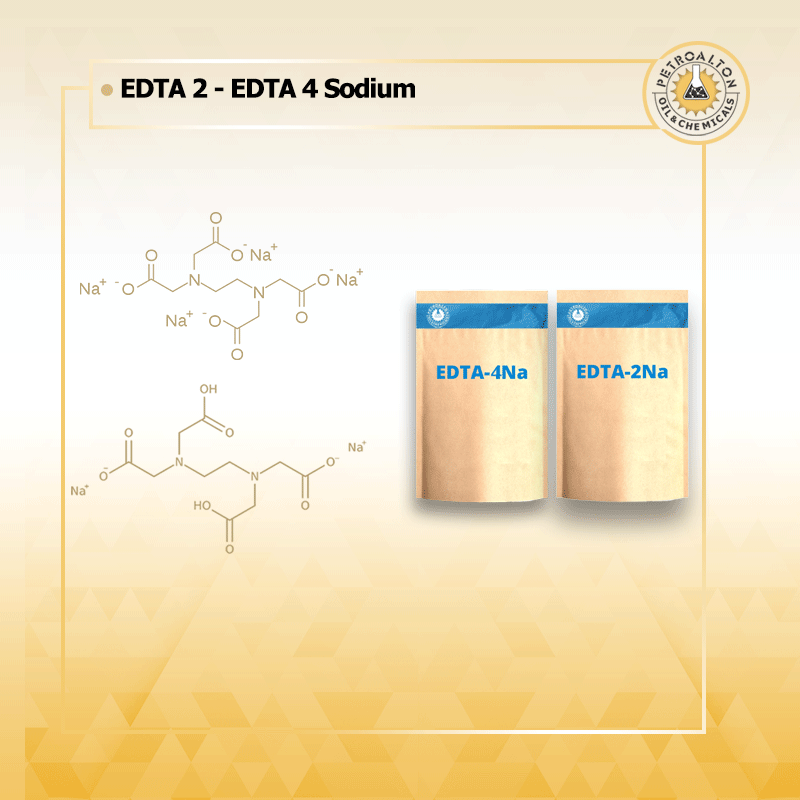
- EDTA 2Na (Disodium EDTA): Two of the four acidic groups are replaced with sodium.
- EDTA 4Na (Tetrasodium EDTA): All four acidic groups are replaced with sodium.
The main difference lies in solubility and final solution pH, which makes them suitable for specific applications.
Main Applications of Sodium EDTA:
- Chelating agent: Captures metal ions (iron, calcium, magnesium, copper, etc.)
- In detergents and soaps: Prevents lime and soap scum, improving cleaning efficiency.
- In food: Acts as a preservative by preventing metal-catalyzed spoilage.
- In cosmetics: Stabilizes formulations, preventing discoloration or odor.
- In medicine: Treats heavy metal poisoning by capturing metals and removing them from the body.
- In agriculture: Increases metal nutrient availability for plants.
- In water treatment: Removes unwanted metal ions.
EDTA 2Na:
Disodium EDTA is a colorless crystalline solid. Its main application is in binding metal ions, enhancing the effectiveness of cosmetics and stabilizing soaps and detergents.
EDTA 4Na:
Tetrasodium EDTA (EDTA-4Na) is a white crystalline solid produced by neutralizing EDTA with four equivalents of sodium hydroxide. Commercial EDTA 4Na is usually hydrated (EDTA-4Na·4H2O). It can bind specific metal ions, preventing product degradation, microbial growth, and increasing shelf life, especially in cosmetics and personal care products.
Chemical Formulas:
- EDTA 2Na: C10H16N2O8-2Na
- EDTA 4Na: C10H12N2O8-4Na
Price:
Global market prices range from $870 to $900 per ton, depending on supply, demand, and currency fluctuations.
Applications in Industry:
- Enhances detergent performance in hard water
- Preserves food, pharmaceutical, and cosmetic products
- Paper industry: whitening
- Textile industry: color stabilization and whitening
- Agriculture: used in fertilizers and pesticides
Production of EDTA 2Na and EDTA 4Na:
EDTA and its sodium salts are primarily produced via the Strecker synthesis or cyanomethylation. Main raw materials: ethylenediamine, formaldehyde, and sodium cyanide.
Process Overview:
- EDTA acid formation: Ethylenediamine reacts with formaldehyde and sodium cyanide in alkaline water at 60–150ºC, forming EDTA 4Na and ammonia.
- Salt conversion: EDTA 4Na can be partially acidified to form EDTA 2Na. EDTA 4Na is highly soluble and stable in alkaline conditions, while EDTA 2Na is suited for neutral to slightly acidic pH applications.
Hazards:
Direct contact with skin or eyes can cause serious injury. EDTA 4Na is flammable; in case of fire, use carbon dioxide or foam extinguishers.
Storage:
Store away from heat, flames, and moisture in covered warehouses.
Major Producers:
China, Germany, and Iran.
Purchase Sources:
Available from reputable chemical importers such as PetroAlton Tajhiz.