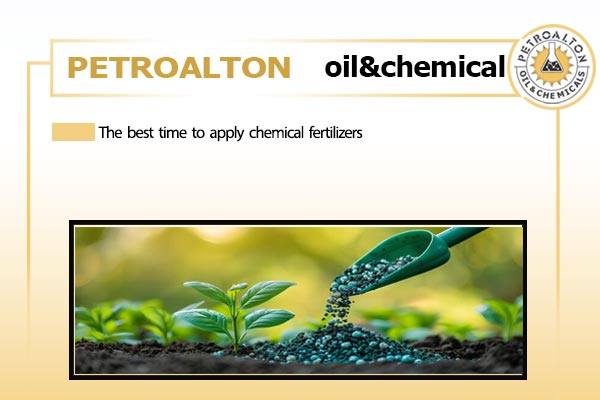
The timing of chemical fertilizer application varies depending on the type of fertilizer, plant type, and growth stage. To better understand when the best time to apply is, let’s break it down:
- Nitrogen fertilizers (nitrogenous such as urea, ammonium nitrate)
Best time to apply:
-In the early vegetative growth of the plant, that is, when the plant is growing leaves, stems, and branches.
For crops (such as wheat, corn, rice):
-One-third before or at the time of planting
-The remaining two-thirds during the growth stages (for example, tillering to clustering)
For garden crops: At the beginning of spring growth or twice (early growth and after initial fruiting).
If you apply later (at flowering or near harvest), it will cause excessive growth of foliage and reduce the quality of the product.
- Phosphate fertilizers (such as triple superphosphate)
Best time to use:
-Before or during planting; because phosphorus has little mobility in the soil and must be close to the roots.
-Usually during land preparation (along with plowing or before transplanting).
- Potash fertilizers (such as potassium sulfate)
Best time to use:
-Before planting (for tubers such as potatoes, sugar beets)
- Or during fruiting and seed filling for garden crops.
Potassium helps improve fruit quality, color, flavor, and plant resistance to stress.
- Micronutrients (iron, zinc, manganese, etc.)
Best time to use:
Depending on the type:
-If it is in the form of foliar spray → during active plant growth (especially before flowering).
-If it is in the form of soil → before planting or at the beginning of growth.
- Complete NPK fertilizers
Best time to use:
-2 to 3 times during the growing season.
First time: at planting or early growth.
Second time: rapid growth stage.
Third time: before flowering or fruit formation.
Golden tip:
The best results are achieved when fertilization is done based on soil tests.
Without knowing the real needs of the soil, you may spend money but not get results or even harm the plant.